
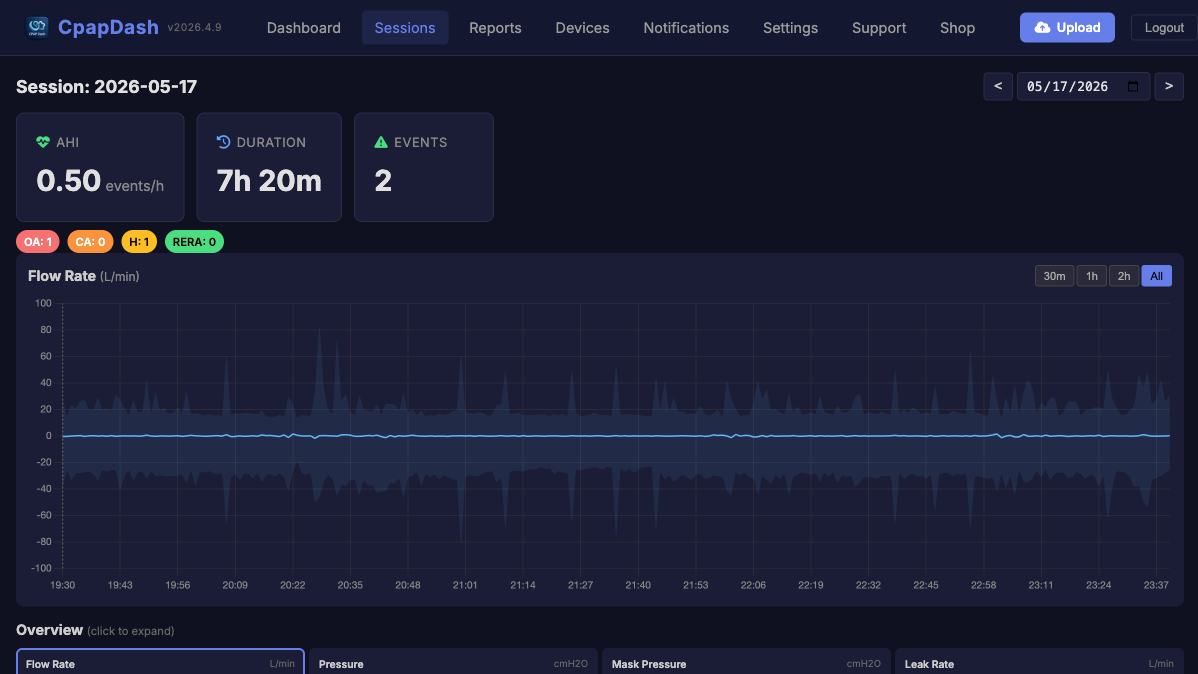
I get it, AHI is important, really important, but it's not everything you need to know about your sleep data. So in CpapDash I try to push the maximum amount of data possible, extracted and synthesized in a way you can actually see and digest.
So today I'll give you the 2-minute quick tour of your data.
The night at a glance
The dashboard opens on your most recent night and the trends behind it: AHI, usage hours, leak, pressure, and your therapy mode, big and up top. It's the "am I okay?" glance before your morning coffee or tea, I don't judge. Underneath, every metric is already plotted over the last month, so a single rough night never looks like a crisis and a slow drift never hides.
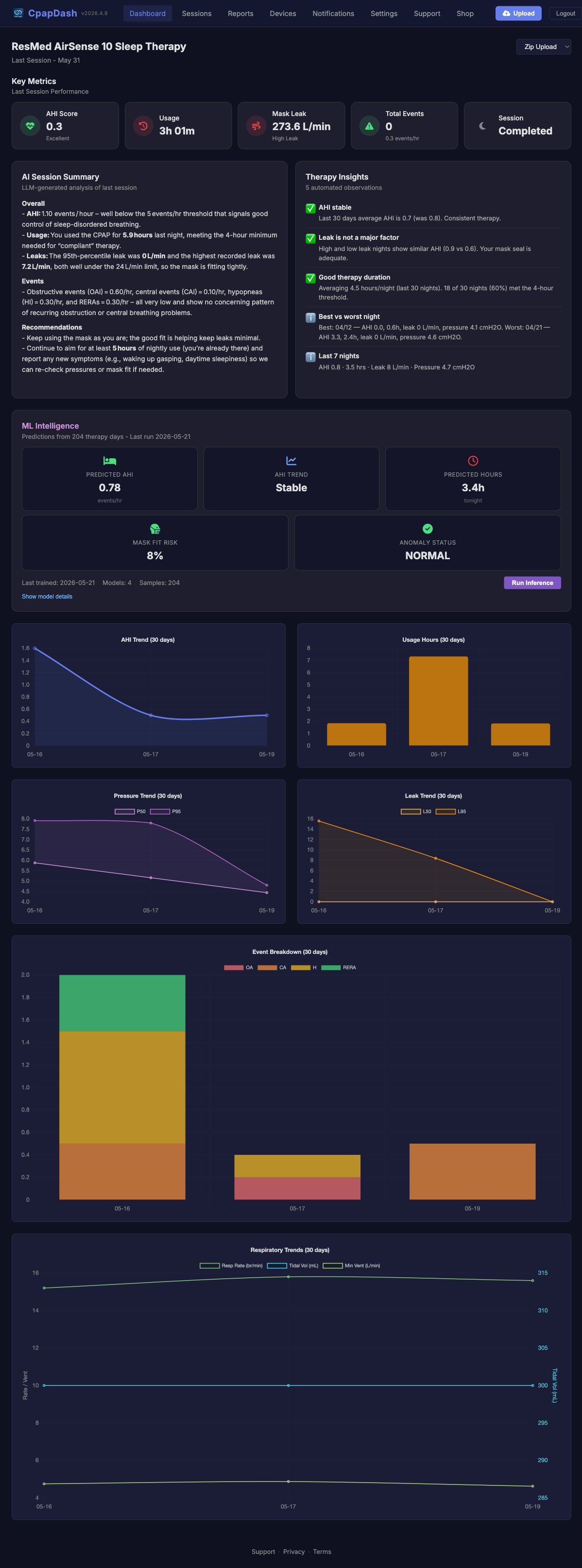
Green-ish numbers mean a normal night. The point isn't to chase a perfect score. It's to know what your normal looks like, so you notice when it moves.
Digging deeper: one night, every signal
Tap into a night and the whole session opens up. Not just how many apneas, but what kind and when:
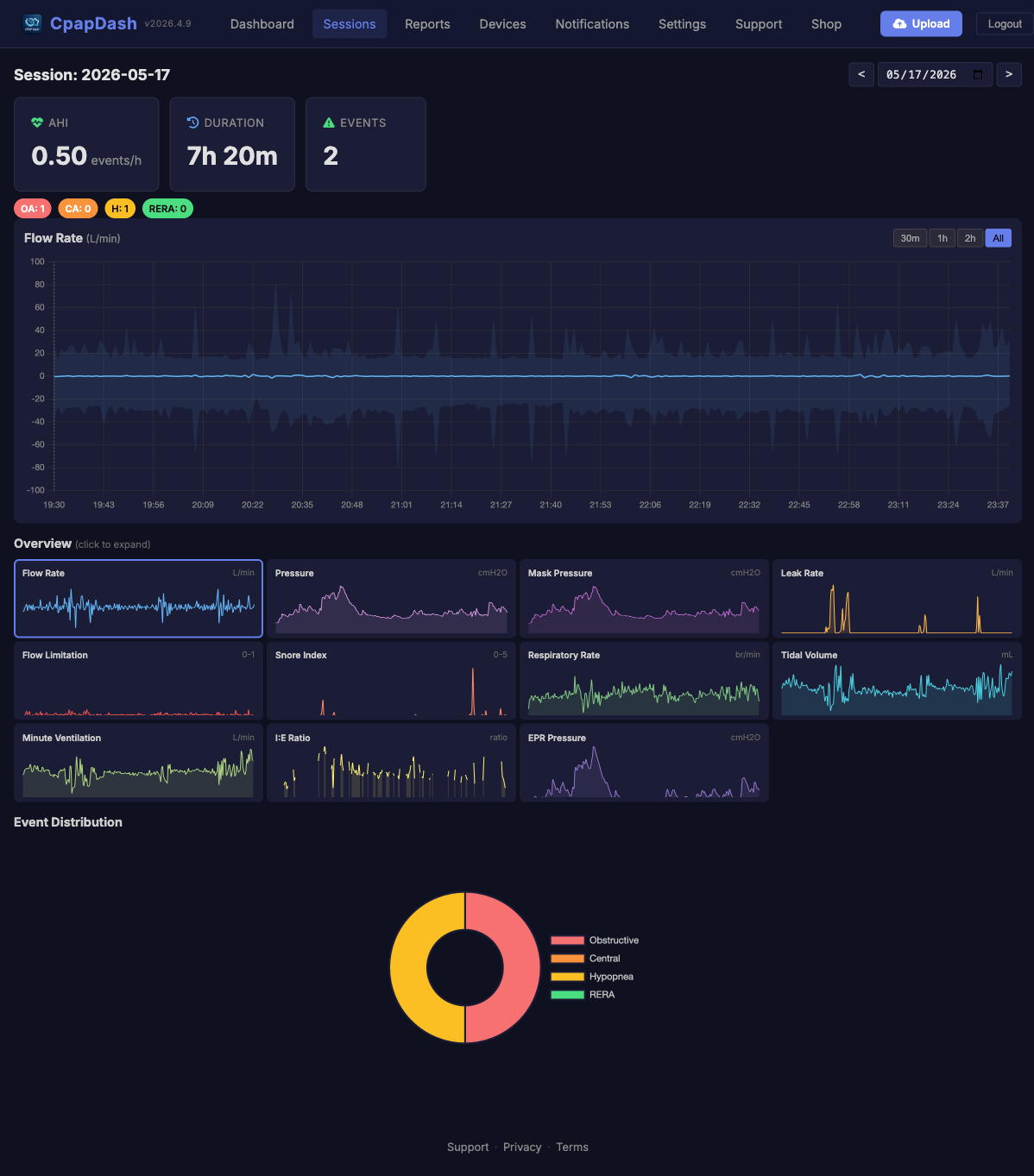
- Events. Obstructive, central, hypopnea, RERA, broken out and counted. A night of mostly central events tells a very different story than obstructive ones, and the donut shows the mix at a glance.
- Flow rate and pressure. This is what the CPAP actually delivered, not just what it's set to. You'll see it ramp, hold, and react. Zoom into any 30-minute window.
- Leak. Mask fit, basically. A spike usually means you rolled over and broke the seal. But if you see a trend, check with your doctor.
- Breathing. Respiratory rate, tidal volume, minute ventilation, I:E ratio. The actual shape of your breathing, second by second.
- Oxygen. Mule and Miner also pairs with a Wellue O2Ring, so SpO₂ and heart rate ride right alongside the rest, with desaturations and your ODI called out, so you can line a drop in oxygen up against the event that caused it.
Let the app read it for you
New: CpapDash also writes the night up in plain English. The Session Summary, with the help of AI, turns those charts into sentences ("leak well under the limit, mask fitting tightly; events very low, no concerning pattern"). Nothing that wasn't already there, just summarized. Therapy Insights surfaces a handful of automated observations across the last 30 days. And ML Intelligence forecasts where the AHI is going. It's the difference between having the data and understanding it, without needing a medicine degree.
Trends are where it clicks
One night is a snapshot. The trend lines are the story. AHI drifting up over two weeks? Leak creeping after you changed cushions? Usage slipping on weekends? That's the stuff a single night hides and a trend makes obvious, and it's right there on the dashboard, no digging.
Every night, in a list
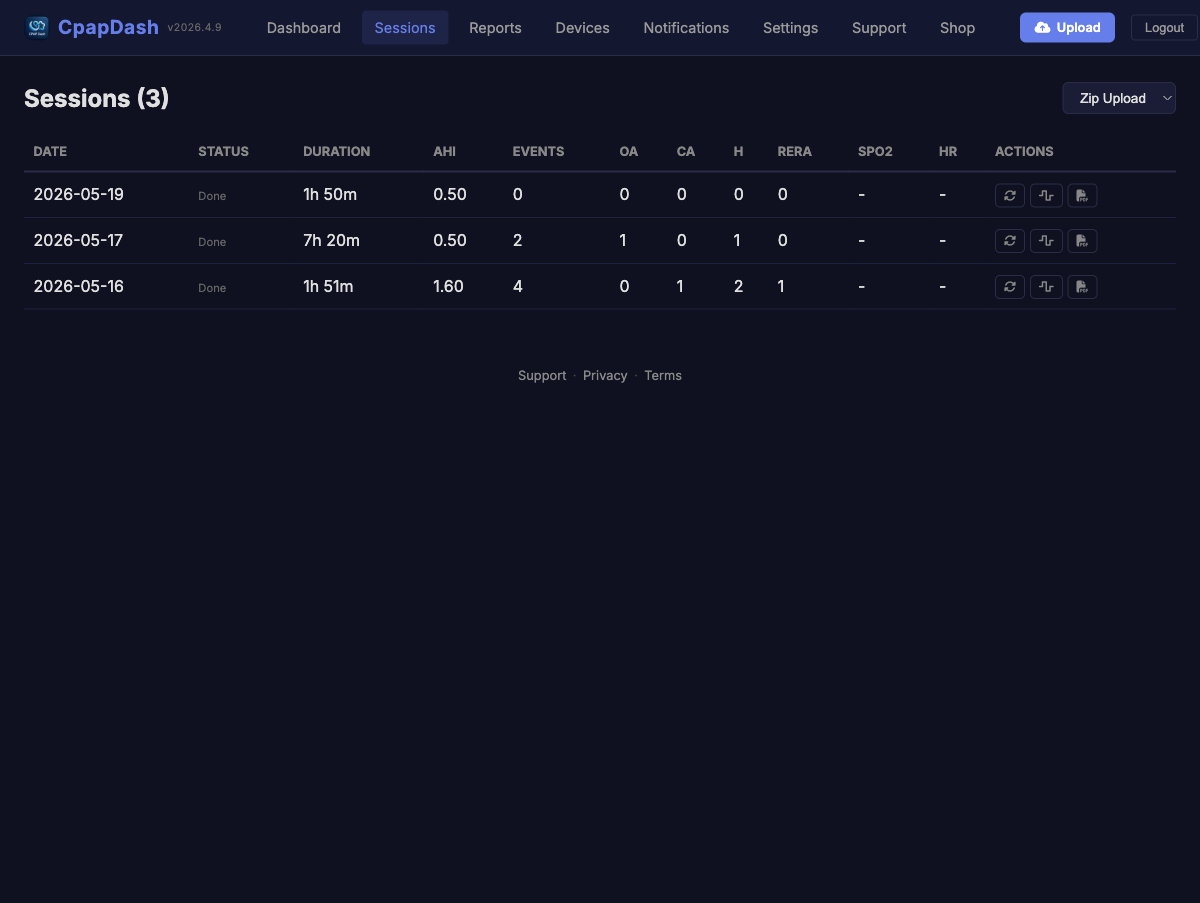
Want the raw log? The sessions table is every night you've recorded: date, AHI, duration, the event counts, oxygen if you have it. It's sortable, and one click from the full detail view.
And it's all free
The whole viewer (dashboard, sessions, trends, statistics, PDF reports) is free because it's your own data. The paid tier is about interpretation (the AI summaries and insights above, plus messaging, the background pipelines that cost money to run), not access.
Poke around. The fastest way to learn what's normal for you is to look at a few good nights and a few rough ones back to back.